How Much Do ISO Consultants Charge in the UK?
ISO consultant fees in the UK vary depending on business size, system maturity, and the complexity of the ISO standard being implemented, with costs ultimately driven by the gap between your current processes and certification-ready requirements. In practical terms, the more structured your existing systems are, the less consultancy input is required; the more fragmented or undocumented your operations are, the more time and expertise is needed from an ISO consultant.
For most organisations, ISO consulting is not a fixed-price service. It is a scoped engagement under the broader category of ISO consultancy services, where pricing reflects time, expertise, and the level of system development required to achieve compliance with standards such as ISO 9001, ISO 14001, or ISO 27001.
ISO Consulting Services Explained
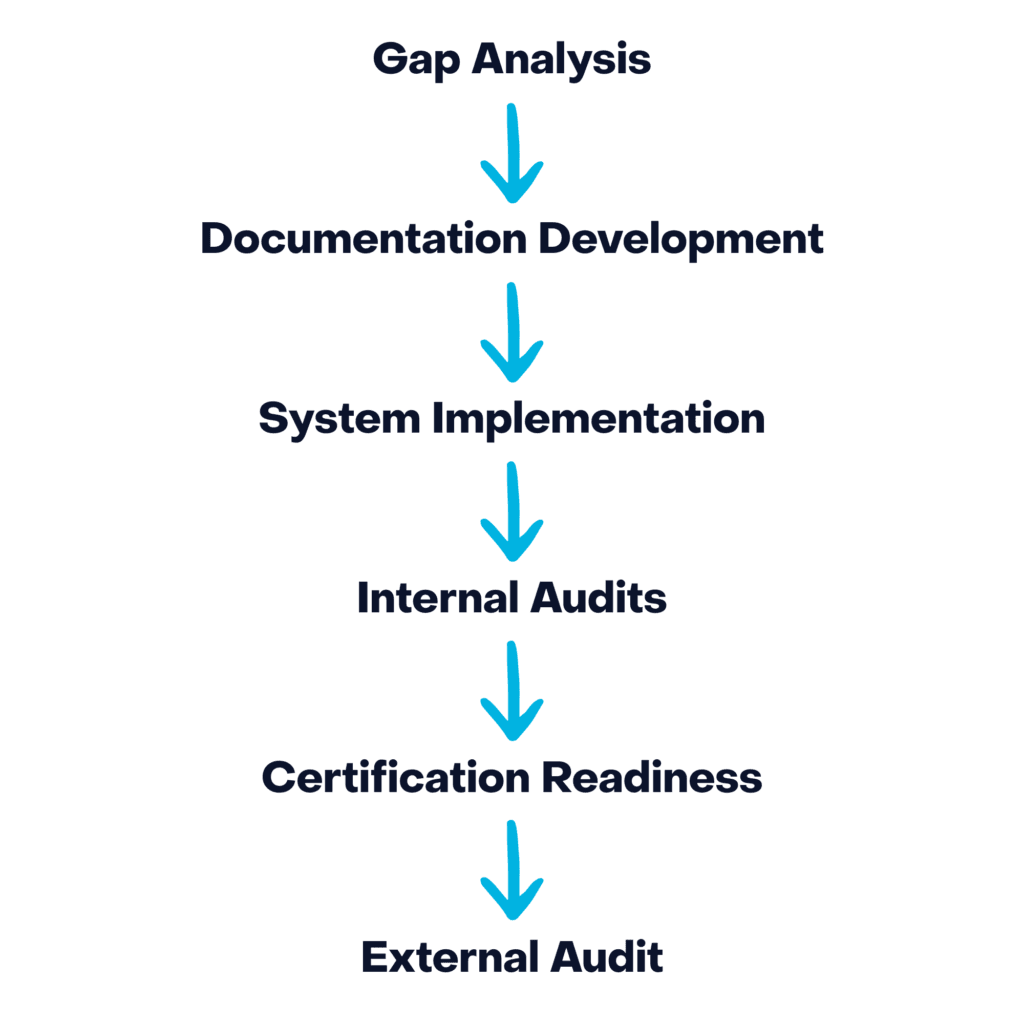
ISO consulting services involve designing, implementing, and supporting management systems that align with international ISO standards. This includes gap analysis, documentation development, internal audit preparation, and certification readiness support.
These services are typically used by organisations seeking:
- ISO certification for the first time
- Support with ISO 9001 consulting services or quality management systems
- Assistance with ISO 27001 consulting services for information security
- Help with multi-site or multi-standard compliance
- Structured ISO certification consultancy before external audit
How Much Do ISO Consultants Charge in the UK?
ISO consultancy pricing depends on scope rather than a fixed tariff. Most consultants structure work as either daily rates or project-based fees, and the total investment is shaped by five core variables:
- Current maturity of your management system
- Size and complexity of your organisation
- Number of sites and processes involved
- Level of internal support available
- The ISO standard being implemented (e.g. ISO 9001 vs ISO 27001)
Typical pricing structure overview (indicative ranges)
| Factor | Low complexity | Medium complexity | High complexity |
|---|---|---|---|
| System maturity | Existing structured system | Partial documentation | No formal system |
| Consultancy involvement | Advisory only | Hybrid support | Full implementation |
| Duration | Short engagement | Multi-stage project | Extended rollout |
| Effort required | Low | Moderate | High |
This variability is why hiring ISO consultants can produce significantly different quotes even within the same industry.
What Drives the Cost of ISO Consultancy?
The cost of ISO consulting services UK-wide is primarily driven by complexity, not the standard itself.
ISO System Maturity
Organisations with established processes require less intervention. Where processes are informal, consultants must design systems from scratch, increasing time and cost.
Business Size and Structure
Larger organisations or those operating across multiple sites require more coordination, documentation alignment, and internal auditing support.
ISO Standard Requirements
Some standards demand deeper technical input:
- ISO 9001 (Quality Management) – operational and procedural focus
- ISO 14001 (Environmental Management) – environmental impact systems
- ISO 27001 (Information Security) – risk and security architecture
Internal Resource Availability
Where internal teams can support documentation and implementation, consultancy becomes more strategic. Without internal support, consultants often deliver end-to-end system build.
Audit Readiness Gap
The larger the gap between current operations and certification requirements, the more consultancy time is required.
What ISO Consultants Actually Do
When businesses invest in ISO consultancy services, they are not simply paying for documentation. They are paying for structured interpretation of standards and risk reduction ahead of certification audits.
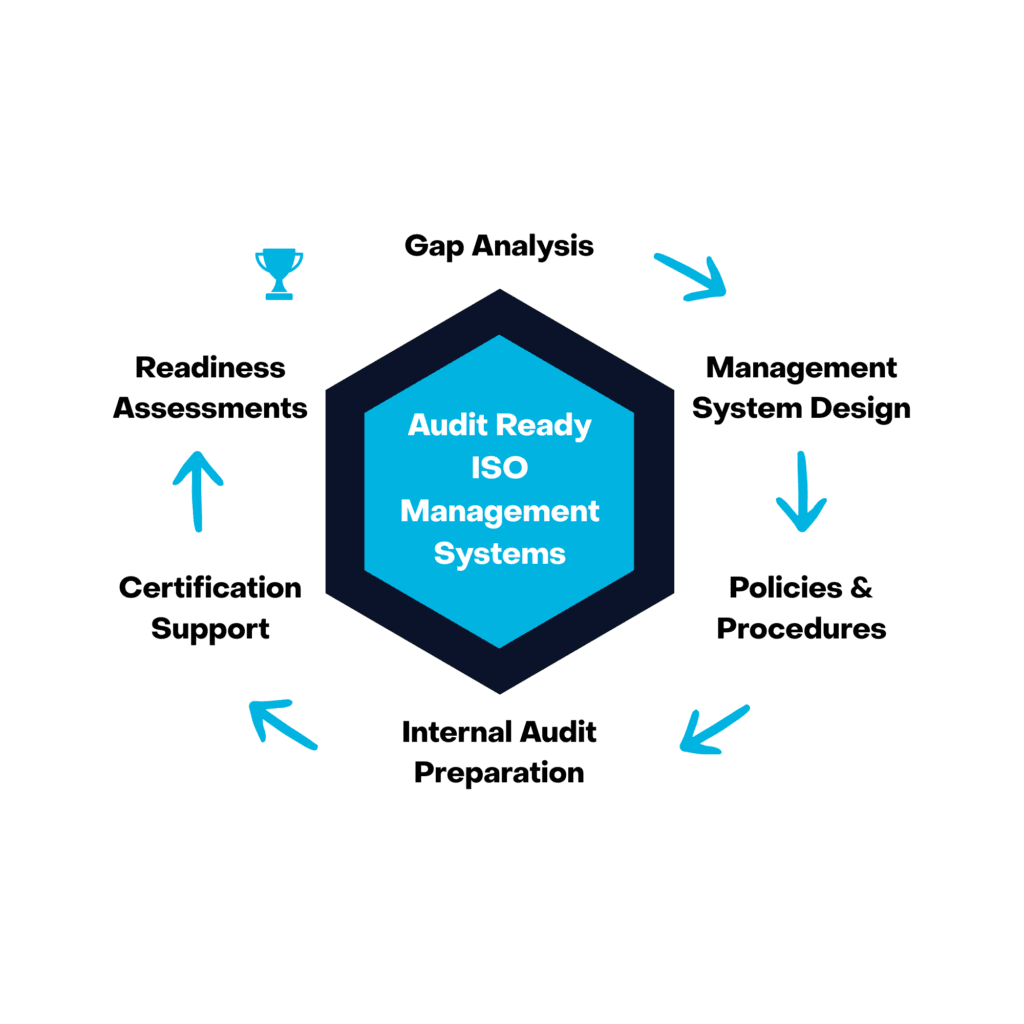
Typical deliverables include:
- Gap analysis against ISO requirements
- Design of management system frameworks
- Policy and procedure development
- Internal audit preparation
- Certification body liaison support
- Pre-audit readiness checks
This ensures the system is not only documented but capable of withstanding external audit scrutiny.
ISO 9001, ISO 27001 and Common Consulting Scenarios
Different standards influence both scope and cost of consultancy engagement.
ISO 9001 consulting services
Focuses on quality management systems, process control, and continual improvement.
ISO 27001 consulting services
Focuses on information security risk management, asset control, and data protection compliance.
Multi-standard ISO solutions
Many organisations combine standards, requiring integrated system design rather than separate frameworks.
Internal vs External ISO Support
A key factor in ISO consulting UK pricing is whether internal teams contribute to implementation.
| Approach | Description | Cost impact |
|---|---|---|
| Internal-led | Business builds system with guidance | Lower consultancy input |
| Hybrid model | Shared delivery between consultant and team | Balanced cost |
| Fully outsourced | Consultant designs full system | Higher cost, faster delivery |
External References for ISO Standards
For authoritative guidance on ISO frameworks and certification principles:
These provide baseline definitions of the standards used in ISO consultancy projects.
Internal ISO Consultancy Support
For organisations exploring certification, structured consultancy support typically sits within broader ISO implementation services.
- ISO Consultancy Services page
- ISO 9001 Implementation support page
- ISO 27001 Consulting services page
- About / Company expertise page
Common Misunderstanding About ISO Costs
Many organisations assume ISO consultancy is expensive due to certification complexity alone. In reality, cost is driven by preparation level.
Operational systems may appear compliant internally but often lack:
- Documented evidence trails
- Consistent governance structure
- Audit-ready reporting mechanisms
These gaps typically only surface during pre-certification reviews or formal audits.
When Businesses Typically Engage ISO Consultants
Organisations usually seek ISO consulting services UK providers when they:
At this stage, consultancy is primarily about reducing risk and ensuring certification readiness.
So, How Much Does An ISO Consultant Charge?
ISO consultant charges in the UK are not fixed because ISO consultancy is not a standardised product. It is a scoped professional service based on system maturity, organisational complexity, and the level of work required to achieve certification readiness.
The key determinant of cost is not the ISO standard itself, but the distance between your current operational processes and a fully auditable management system.
If you are assessing ISO certification costs UK, or exploring ISO consulting services, the most effective starting point is a structured gap analysis to define scope accurately before committing to implementation.
Use the form below to discuss your requirements with an ISO consultant and gain clarity on the most suitable approach for your organisation.