How ISO 45001 Can Save Your Business Time, Money and Effort

ISO 45001 helps organisations create safer workplaces while reducing the financial and operational impact of accidents, ill health and absence. This article explains what the standard is, who can benefit from certification and how its structured approach can save time, money and effort. It also compares proactive health and safety management with a reactive approach, considers psychological wellbeing through ISO 45003 and covers the latest developments, including the 2024 climate amendment and the ongoing revision expected to produce a new edition of ISO 45001.
What Is ISO 45001?
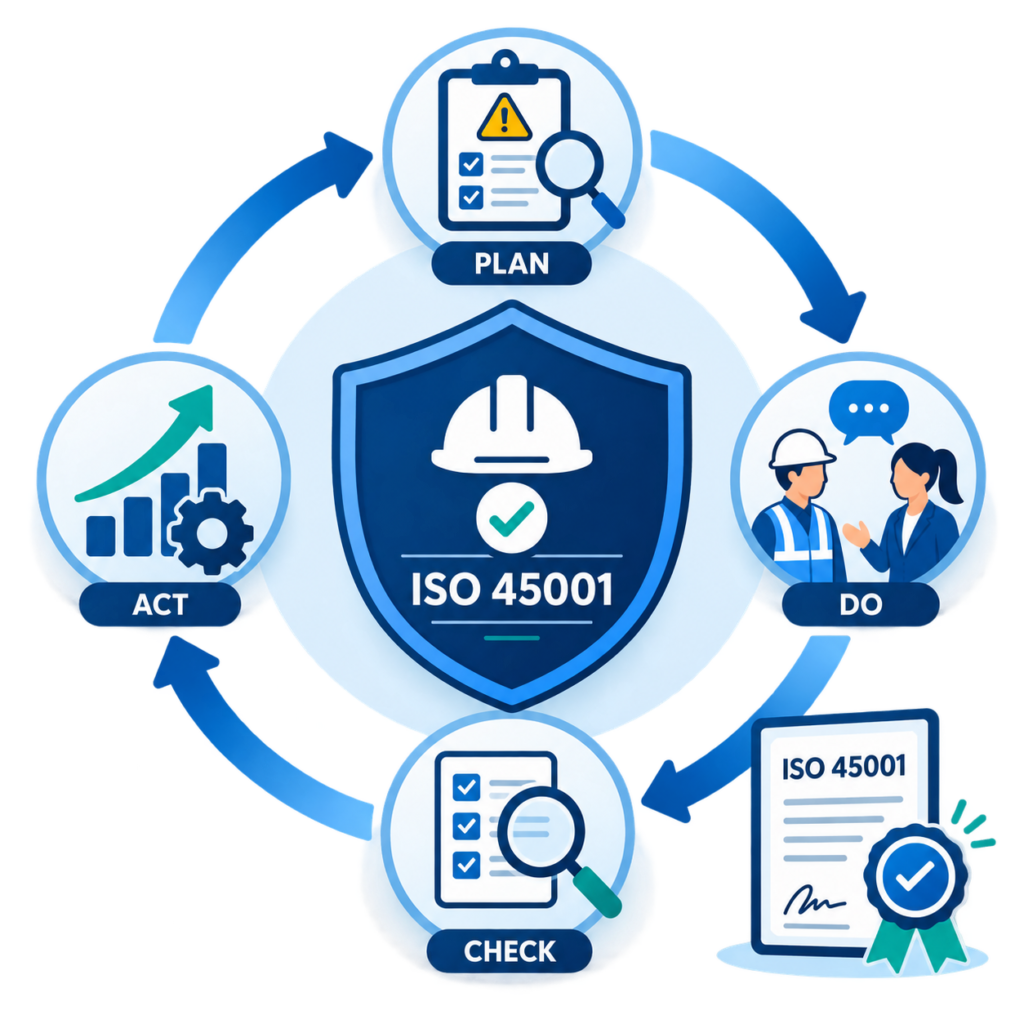
ISO 45001 is the internationally recognised standard for Occupational Health and Safety (OH&S) Management Systems. It uses the Plan-Do-Check-Act approach to help organisations identify hazards, assess risks, implement controls and continually improve their performance.
The standard is suitable for organisations of every size and sector, including offices, construction, manufacturing, engineering, transport and professional services. It addresses physical hazards alongside leadership, worker consultation, emergency preparedness and occupational wellbeing.
Certification is voluntary and is carried out by independent certification bodies—not ISO itself. However, certification can give employees, customers and stakeholders confidence that workplace risks are being managed systematically. This is the explanation of the standards and certification processes .
Does Your Business Need ISO 45001?
UK law does not require ISO 45001 certification, and achieving certification does not automatically guarantee legal compliance. However, the standard provides a practical framework for identifying legal obligations, assigning responsibilities and evaluating whether controls remain effective.
Your organisation may benefit from ISO 45001 if it wants to:
- Reduce workplace injuries and work-related ill health.
- Improve employee confidence, participation and productivity.
- Demonstrate responsible health and safety management.
- Strengthen bids for contracts, frameworks and tenders.
- Reduce disruption caused by incidents and staff absence.
- Integrate health and safety with other ISO management systems.
- Maintain clearer records of risks, controls and improvements.
How ISO 45001 Saves Time, Money and Effort
Poor workplace health and safety can lead to absence, compensation claims, lost production, damaged equipment and reputational harm. HSE estimates that workplace injuries and ill health cost Great Britain £22.9 billion in 2023/24, while 40.1 million working days were lost in 2024/25.
ISO 45001 can help organisations:
- Save money by preventing incidents and reducing associated disruption, claims, repairs and replacement costs.
- Save time through clear procedures, defined responsibilities and faster incident reporting and investigation.
- Save effort by bringing risk assessments, training, objectives and monitoring into one coordinated system.
- Identify the root causes of incidents and near misses before they happen again.
- Improve communication between leaders, managers and workers.
- Direct resources towards the most significant workplace risks.
- Strengthen credibility with clients, insurers and procurement teams, although lower premiums or new contracts cannot be guaranteed.
Reactive Management vs ISO 45001
| Area | Reactive approach | ISO 45001 approach |
| Risk management | Hazards may be addressed after an incident | Hazards are identified and controlled proactively |
| Responsibilities | Duties can be unclear or fragmented | Roles and accountability are clearly defined |
| Worker involvement | Employees may have limited input | Consultation and participation are encouraged |
| Incident management | Problems may be resolved individually | Root causes and corrective actions are investigated |
| Documentation | Records may be inconsistent or duplicated | Information is controlled within one system |
| Improvement | Changes are often made only when necessary | Performance is monitored and continually improved |
Psychological Health and Safety
Effective health and safety management should consider mental as well as physical wellbeing.
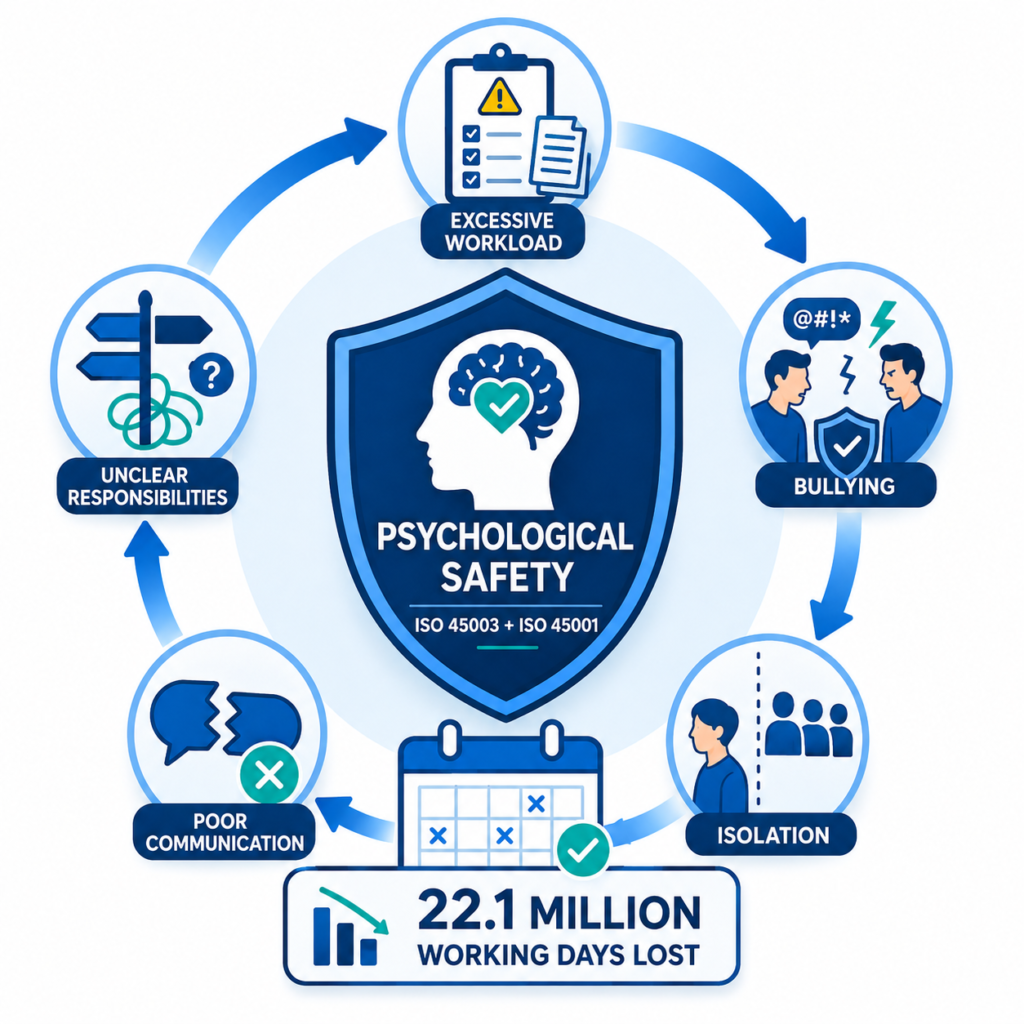
ISO 45003 complements ISO 45001 by providing guidance on psychosocial hazards such as excessive workloads, bullying, isolation, poor communication and unclear responsibilities.
This is particularly relevant because stress, depression and anxiety accounted for approximately 22.1 million working days lost in Great Britain during 2024/25.
What Has Changed?
ISO 45001:2018 remains the current certifiable standard. A climate-action amendment was published in 2024, requiring organisations to consider whether climate change is relevant to their context and whether interested parties have related requirements. Read about the amendment.
A wider revision has reached Draft International Standard stage. Its ballot closed on 9 August 2026, but the final requirements have not yet been published. A revised edition is expected in 2027. Until it is formally released and transition arrangements are announced, organisations should continue using ISO 45001:2018 with Amendment 1:2024.
Getting Started With ISO 45001
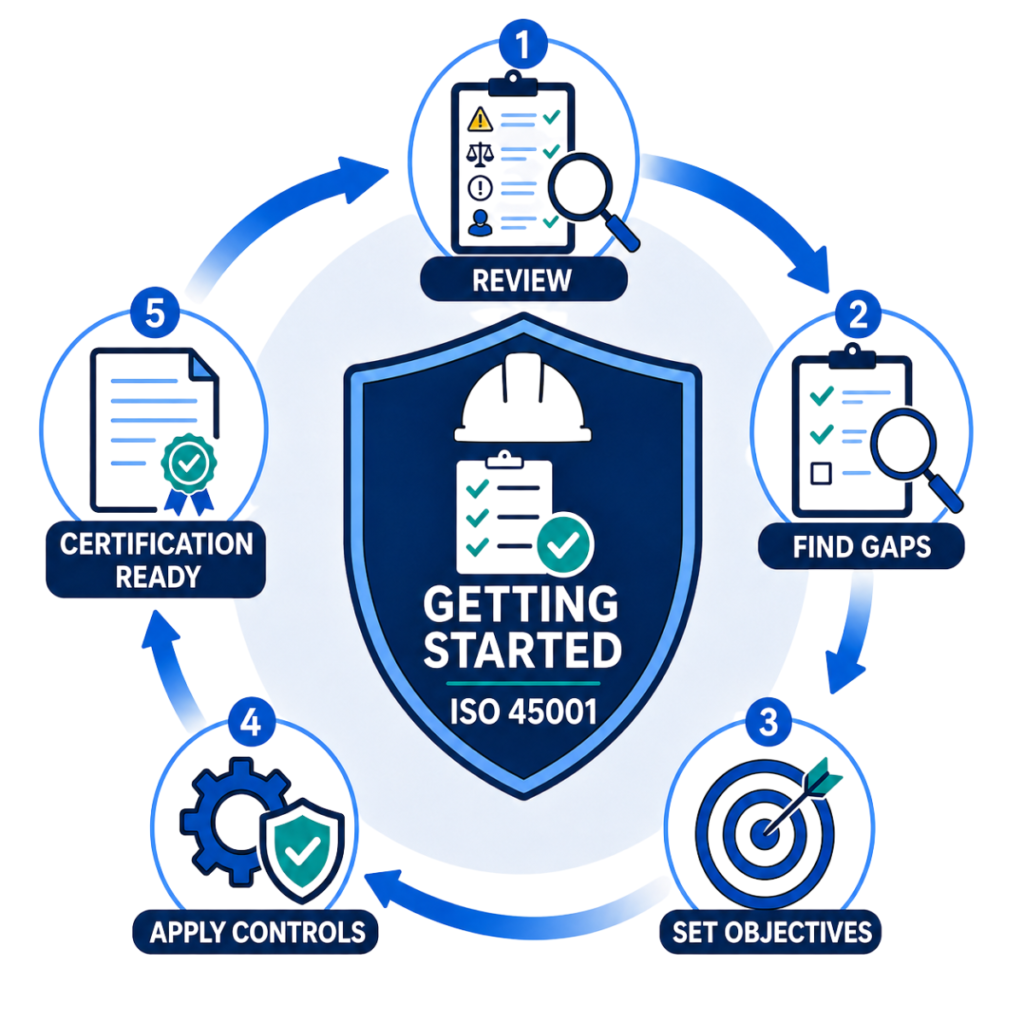
Begin by reviewing your current arrangements, hazards, legal obligations, incident history and employee feedback.
You can then identify gaps, establish objectives, introduce suitable controls and prepare for certification.
Candy Management Consultants can support your organisation with gap analysis, system development, implementation, internal auditing and certification preparation.